


Thin Brick Floors: A Practical Guide for Floors, Patios, and Stairs
Thin brick doesn’t just look great on walls—it’s also tough enough for real-world use underfoot. Whether you’re finishing a kitchen, patio, mudroom, or set of stairs, thin brick adds warmth, texture, and lasting durability. Here’s everything you need to know about selecting, preparing, and installing thin brick flooring.
Watch it in action: see real floors and patios built with Old Mill Brick and Brickwebb in our YouTube Shorts playlist.
Where Thin Brick Works Best
- Interior floors: kitchens, foyers, mudrooms, laundry rooms, and powder rooms. Great for residential and light commercial spaces.
- Exterior living: patios, porches, and walkways. Avoid driveways or areas with heavy rolling loads—use full pavers there.
- Stairs: thin brick treads and risers over concrete or prepared substrates. Add stair nosing profiles for safer, professional-looking edges.
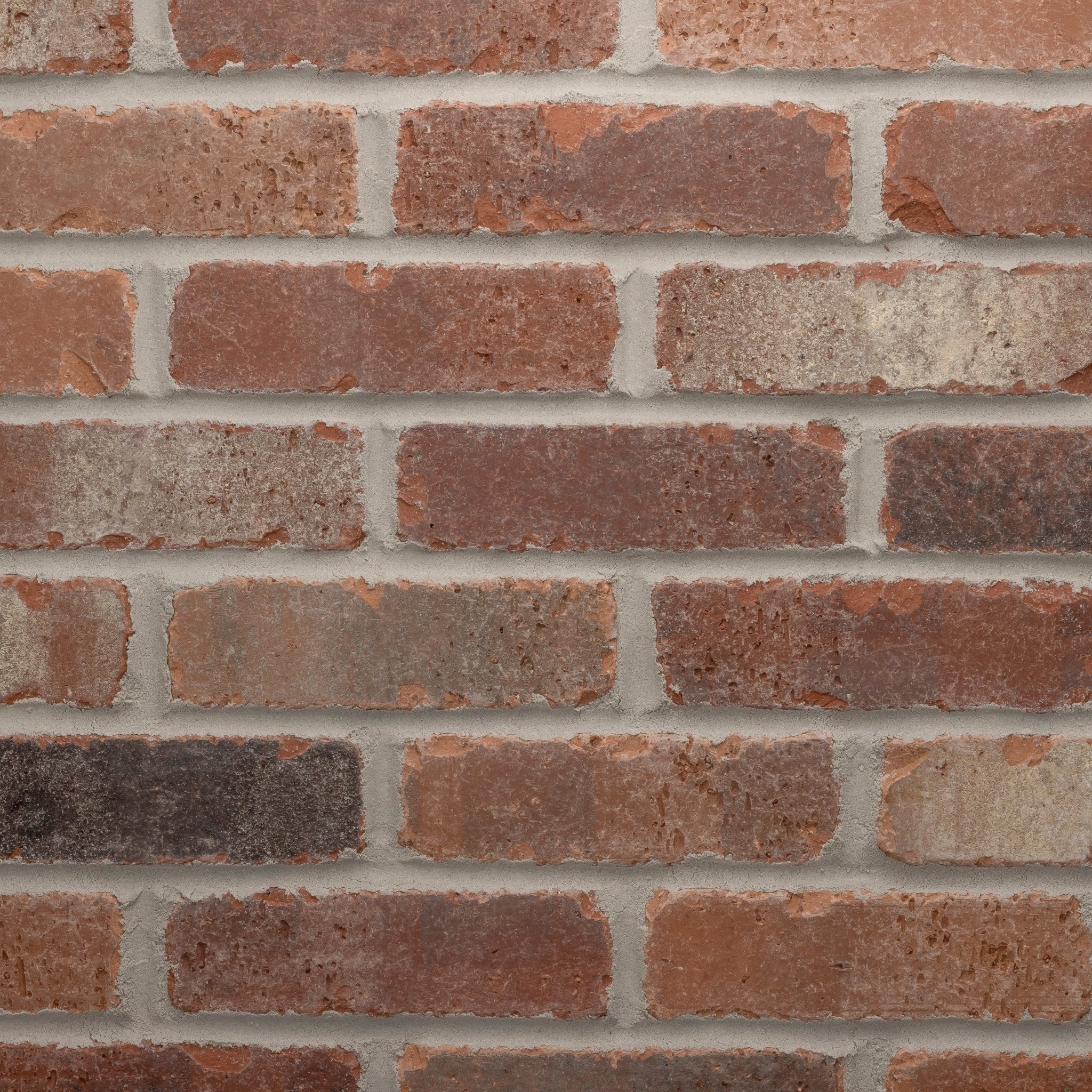
Why thin brick? Real kiln-fired clay brick provides slip resistance, high compressive strength, and color that runs through the body of the brick—so it keeps its look even after years of wear.
Choose the Right Brick
Pavers vs. Thin Veneer Brick
- Clay pavers (ASTM C902) are made specifically for floors and withstand heavy foot traffic.
- Thin veneer brick (ASTM C1088) can also be used for floors—choose through-body colors and medium textures for durability.
Joint width: plan for about 3/8 inch mortar joints. Avoid tight-fit installs, which can trap debris and chip edges.
Substrates and Build-Ups
Wood-Framed Floors
- Minimum subfloor thickness: 19/32 inch combined layers.
- Option A (joists ≤ 16 in o.c.): leveling mortar + ¼ in cement backer board (CBU) + setting mortar + thin brick. Tape seams with alkali-resistant mesh.
- Option B (joists ≤ 19.2 in o.c.): uncoupling membrane + setting mortar + thin brick.
Concrete Floors
- Allow new slabs to cure at least 28 days.
- Use a crack-isolation membrane for on-grade concrete or an uncoupling membrane for elevated slabs.
- Make sure the surface is clean, free of curing compounds, and within ¼ in in 10 ft flatness.
Movement Joints, Membranes, and Radiant Heat
- Movement joints: perimeter and field joints every 25 ft (12 ft for sunny or wet zones) using an ASTM C920 sealant with backer rod.
- Membranes: use ANSI A118.12 crack-isolation or ANSI A118.10 waterproof membranes where needed.
- Radiant heat: embed electric or hydronic systems in a cement underlayment beneath the setting bed; electric systems help where thickness and weight are limited.
Setting Materials and Grout
- Setting bed: polymer-modified thin-set mortar (ANSI A118.4 / A118.15) or Type S mortar for thick-bed installs.
- Grout or mortar joints: use Type N masonry mortar or sanded grout (ANSI A118.6). Avoid high-polymer grouts that may stain brick faces.
Pro tip: Tool concave joints when they reach “thumbprint-hard” to compact the mortar and create a durable, easy-to-clean finish.
Fastest Way to Lay Real Brick: Brickwebb®
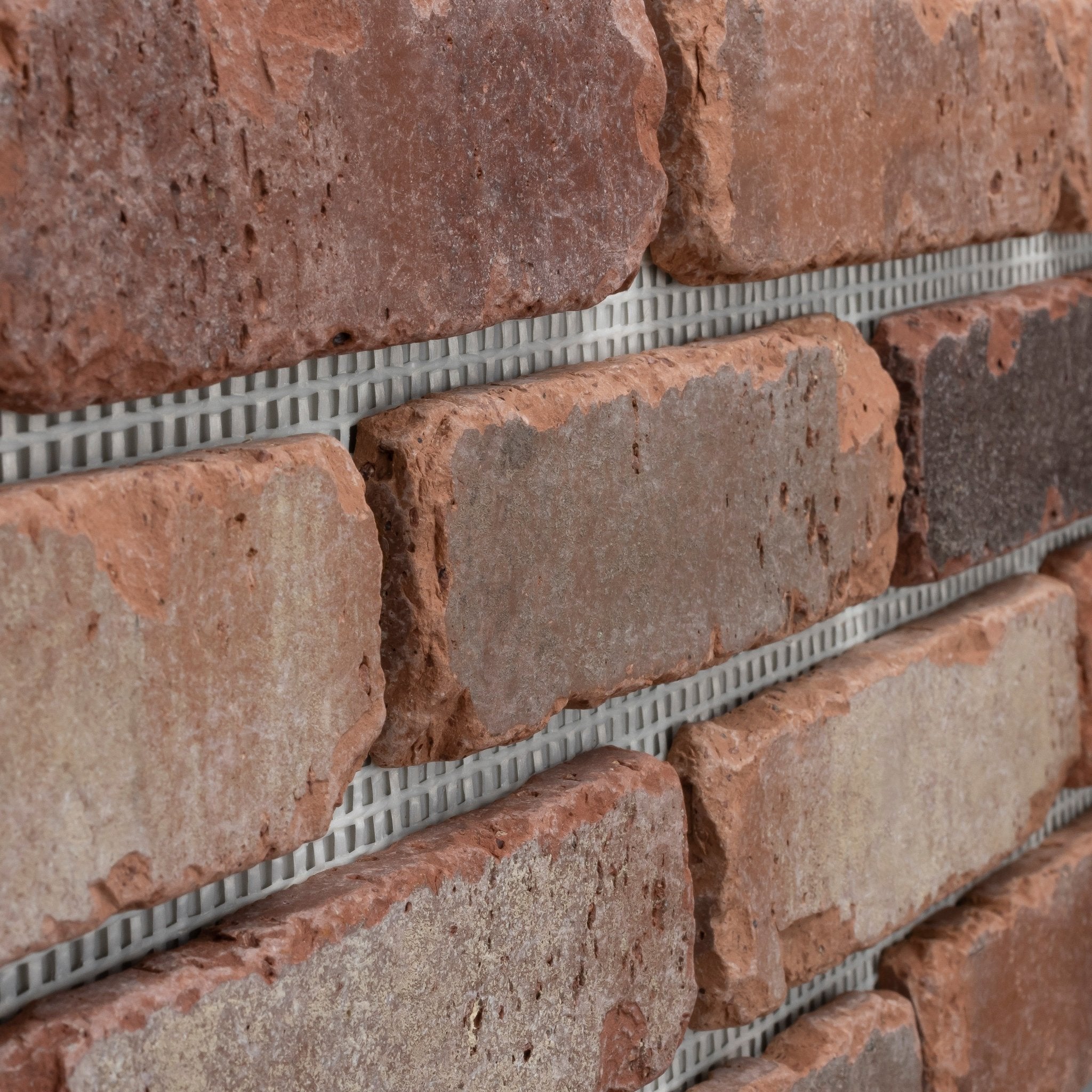
Brickwebb® sheets place up to twelve real clay bricks at once for consistent spacing and faster installation—ideal for floors, patios, and stairs. Brickwebb meets ASTM C1088 Type TBS (Grade Exterior).
- Use Old Mill adhesives and a 3/8 in × 1/4 in notched trowel.
- Press sheets so adhesive keys through the mesh, maintain 3/8 in joints, and allow curing before grouting.
For complete details, download our Brickwebb Flooring Guide (PDF).
Step-by-Step: Installing Thin Brick Floors
- Plan the layout: dry-lay the pattern (running bond, herringbone, or basketweave) and minimize small cuts.
- Prep the substrate: verify flatness and deflection; add CBU or a membrane if required.
- Spread mortar: trowel only as much as you can cover before it skins over.
- Set bricks: press firmly and slide slightly to collapse ridges for full contact.
- Grout and finish: fill joints completely, tool concave, and clean with a soft brush once firm.
Cleaning and Sealing
- Dry clean first: sweep or vacuum before using any cleaner.
- Avoid harsh acids: do not use unbuffered muriatic or hydrofluoric acid. Test cleaners first.
- Seal smart: choose breathable penetrating sealers (silane / siloxane). Avoid heavy topical coatings that can trap moisture or reduce slip resistance.
Specs and Quick Facts
- Joint width: 3/8 in standard.
- Movement joints: 25 ft max spacing; 12 ft in sun-exposed or moisture areas.
- Subfloor: 19/32 in minimum combined thickness for wood structures.
- Concrete cure: 28 days minimum before installation.
- Speed: Brickwebb installs up to 12× faster than single-brick setting.
See Real Projects
Watch our community use Old Mill thin brick and Brickwebb on floors and patios in our YouTube Shorts playlist. You’ll see DIYers and pros create herringbone kitchens, porch makeovers, and rustic patios with real clay brick.
Further Reading and Industry Resources
- Brick Industry Association – Interior Thin Brick Flooring Guide (PDF)
- Old Mill Brick – Brickwebb Flooring Guide (PDF)
Old Mill Brick: Real Brick, Real Simple
Our thin brick is genuine kiln-fired clay—not faux panels. Combined with Brickwebb and the right mortar system, you’ll get authentic floors that stand up to years of foot traffic and still look timeless.